



CPA Advising
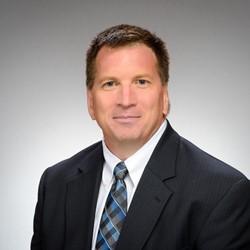 A CPA license is the accounting profession's highest standard of competence, a symbol of achievement and assurance of quality. While Notre Dame and the Mendoza College of Business certainly encourage Accountancy majors to pursue this credential, the curriculum may not include all the coursework required as each of the 50 states have different licensing requirements. It is important for students pursuing this path to research carefully the requirements for the state where they plan to sit for the exam. Professor Tim Morrison is our resident CPA advisor. He can be reached for consultation at tmorris6@nd.edu.
FREQUENTLY ASKED QUESTIONS
1. Do all Notre Dame Accountancy majors sit for the CPA exam?
No, but the majority of ND Accountancy majors do sit for and pass the CPA exam. The rigorous ND curriculum positions accounting graduates to succeed not only in employment situations but also with regard to the professional examination for accountants, the CPA exam. More information on the CPA exam may be found on the AICPA website.
2. How do Notre Dame students perform on the CPA exam?
ND accounting graduates are among the top performers in the country on the CPA exam with pass rates approximately well above the national average.
3. What is the 150 hour requirement?
This is a requirement that many states are in the process of eliminating (but some are keeping). Prior to 2025, all states required that students have the equivalent of 150 semester hours of college credit to become a CPA. In 2025, many states (including Illinois, New York, California, and Texas, amongst others) introduced a pathway to CPA licensure with only 120 hours. These new pathways to a CPA license will be phased-in over the next couple of years.
4. Are there any other state specific requirements for CPA licensure?
Many states have specific course requirements to obtain your CPA license - for instance, required semester hours in accounting and general business (and possibly required hours of these courses in upper level classes) or required course topics (auditing, cost accounting, communications, ethics, taxation, etc.).
5. May I take required accounting courses at other colleges and universities?
If your state requires accounting courses beyond the courses required by Notre Dame to complete the BBA degree with a major in Accountancy, those additional courses may be taken elsewhere, but they cannot be duplicative of what you have already taken. Some states require these hours to be from an accredited bachelor degree granting institution.
6. How do AP hours impact the either 120 or 150 hours requirement?
AP hours ‘count’ if they are accepted by the student’s school and thus are reported on a transcript and if they are not duplicative. That means if a student earns 4 credits from the AP examination(s) for Calc but then takes Calc at ND, the student cannot ‘count’ the AP hours.
7. May I sit for the CPA exam before I complete my coursework?
Some states permit students to sit for the exam prior to completing their course work and some states require the student complete all coursework prior to sitting for the CPA exam. For instance, Illinois permits students to sit for the CPA exam in the semester in which they will complete the requirements to sit for the CPT exam (including courses in their required content areas). However, not every state treats this the same way. Most ND Accountancy graduates sit for the CPA exam during the second semester of their senior year or shortly after graduation.
8. Should I participate in a CPA review course?
Most students who are successful in passing the CPA examination on the first attempt have participated in a structured review. It is not a requirement but certainly can help students prepare. Some of the larger employers provide students access to on-line programs once they accept a full time offer.
9. What is the Masters of Accountancy (MSA) Program?
One path to meeting the academic requirements for the CPA exam is to earn a graduate accountancy degree. Notre Dame has one of the top programs – the Masters of Accountancy Program – in the country. Even students who have met the CPA requirements have earned the MSA degree in order to enhance their academic knowledge and expedite their careers. Students are encouraged to visit the Notre Dame MSA office and discuss the program – even if they can meet the academic requirements without the degree. Students may begin this program in August or January depending on when they complete their undergraduate work.
10. How should I get started?
The first step is to understand the education requirements for a CPA license in the state(s) you are considering working. For many states the education requirements are included on the National Association of State Boards of Accountancy (NASBA) website (NASBA CPA Exam link). If the NASBA website does not include the education requirements for your desired state(s), it will include a link to the website for the applicable state board. Once you understand the requirements for the state(s) you are considering, assess if your scheduled courses will meet the requirements.
HELPFUL RESOURCES/LINKS
Due to constantly changing rules, always go to the website for your state to verify you have the most recent version.
National Information
AICPA CPA exam toolkit – provides a CPA exam overview
NASBA provides links to the state requirements for the CPA exam for all 50 states
State specific Information(for a few states)
California - CPA Requirements(license)
Florida – Process to be a CPA(sit and license)
Illinois - CPA requirements(sit and license)
Illinois – New applicant process overview
Texas - CPA requirements (sit)
- Last Updated March 20, 2026

© 2015 University of Notre Dame